
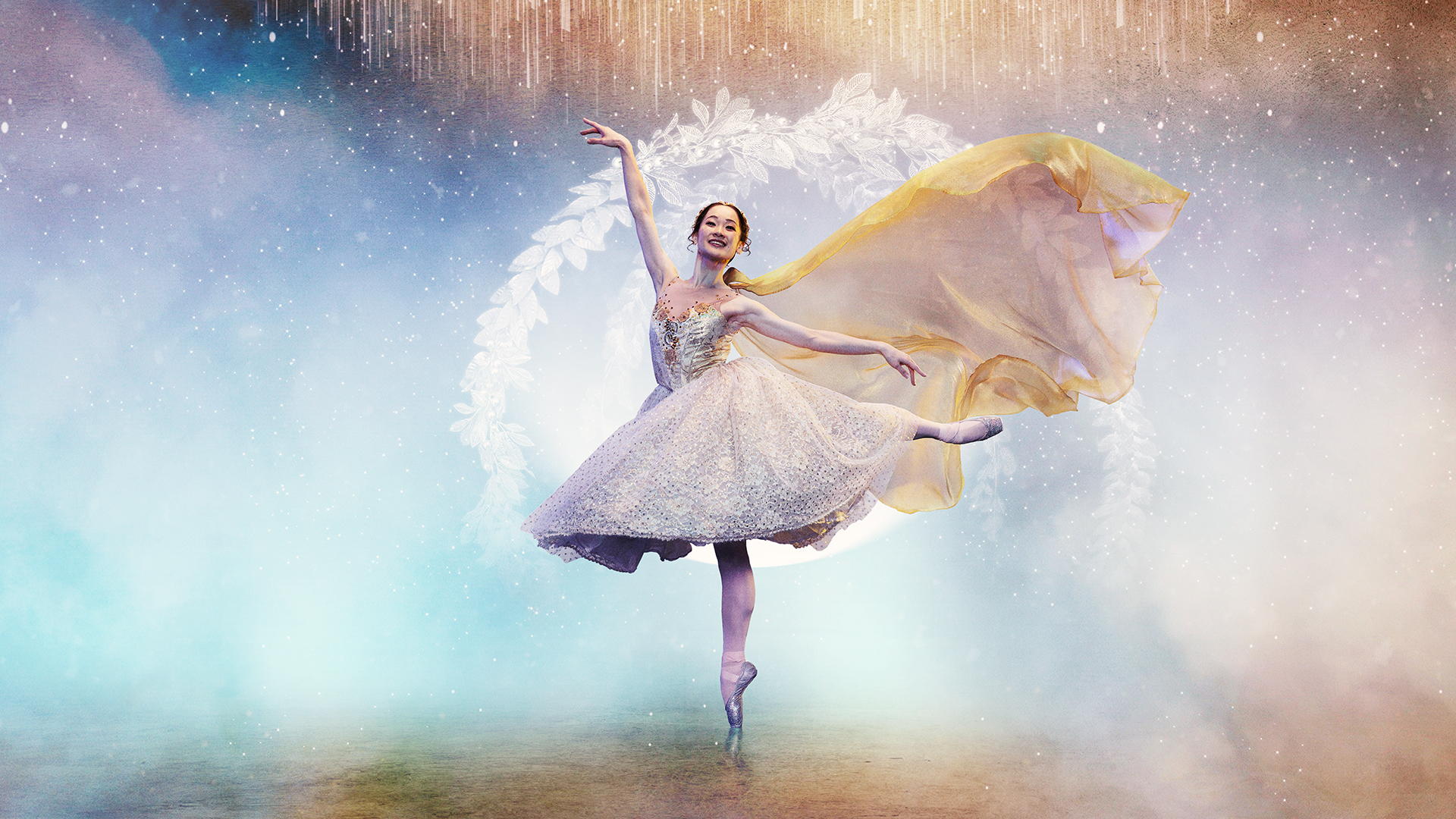
Saeka Shirai as Cinderella in Michael Pink’s Cinderella. Image credit: Guy Farrow

Tick tock, midnight awaits! Northern Ballet brings the UK Premiere production of Michael Pink’s Cinderella to Newcastle Theatre Royal with a unique twist on the fairytale classic.
One of the brilliant things about ballet is its century-spanning connection to storytelling through dance. Whilst many of the beloved classics do not end on the happiest of circumstances (think Giselle, Manon or Swan Lake), you can’t go wrong with a fairytale like Cinderella, even with its Grimm brothers influence.
The 2026 UK premiere of Michael Pink’s Cinderella, which first premiered with Milwaukee Ballet in 2009, brings a very pretty and generally consistent retelling of the tale, with notable changes that are perhaps less adopted across other renditions of the ballet. Instead of a Fairy Godmother, we have the spirit of Cinderella’s recently deceased mother, at the ball oranges are gifted to guests – a directional choice made popular by Frederick Ashton’s 1948 Cinderella with The Royal Ballet, and instead of glass slippers we have, well, sparkly pointe shoes…but I think we can forgive that transgression, dancing in pointe shoes is hard enough without adding glass into the mix!
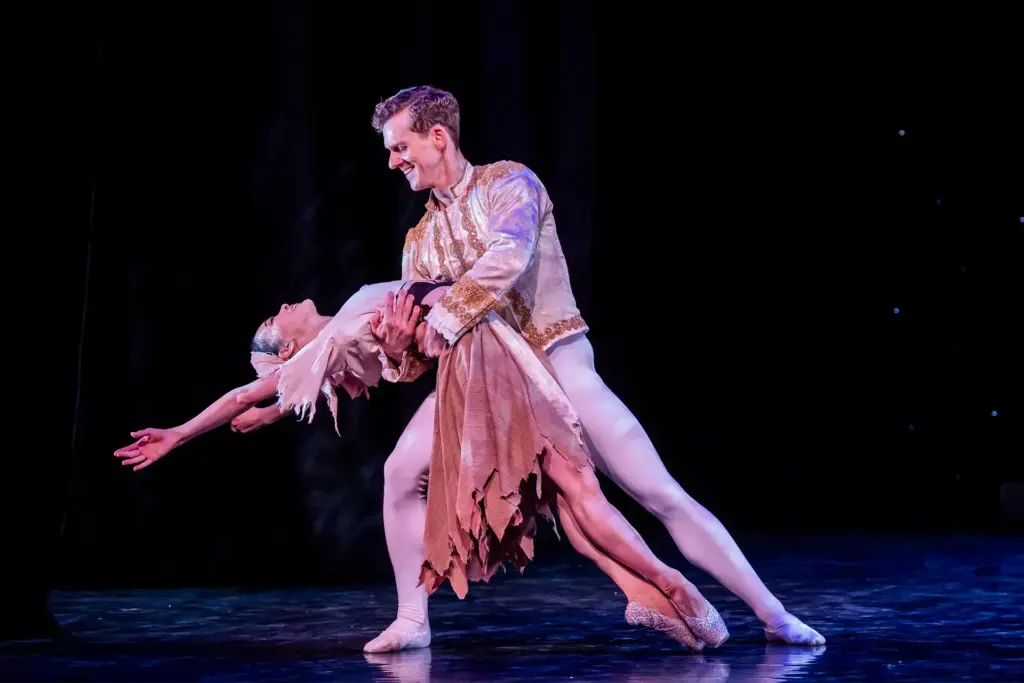
Principal dancer Saeka Shirai shines as the lowly Cinderella, with some of her most delightful moments and exquisite pas de deux in Cinderella’s home with soloist Harris Beattie as her friend Jack – in fact, their chemistry was so good I initially thought Cinderella and Jack might end up together, now that would be a twist ending. Shirai truly embodies the emotional journey of Cinderella, and Prokofiev’s score helps in channelling this. The motifs found in the music, performed live by Northern Ballet Sinfonia, are a clear guide for not only the dancers but the audience too in understanding where we are in the story. For instance, when Cinderella and the Prince, played by principal dancer Jonathan Hanks, share multiple dances together at the ball, there is a clear distinction between their first and second pas de deux. The first, you can hear playful and menacing undertones that often appear when the Ugly Stepsisters are present, also indicating that midnight is drawing closer. In the second, there is no presence of this theme, giving Cinderella and the audience a fuller sense of her freedom and intimacy in the moment.
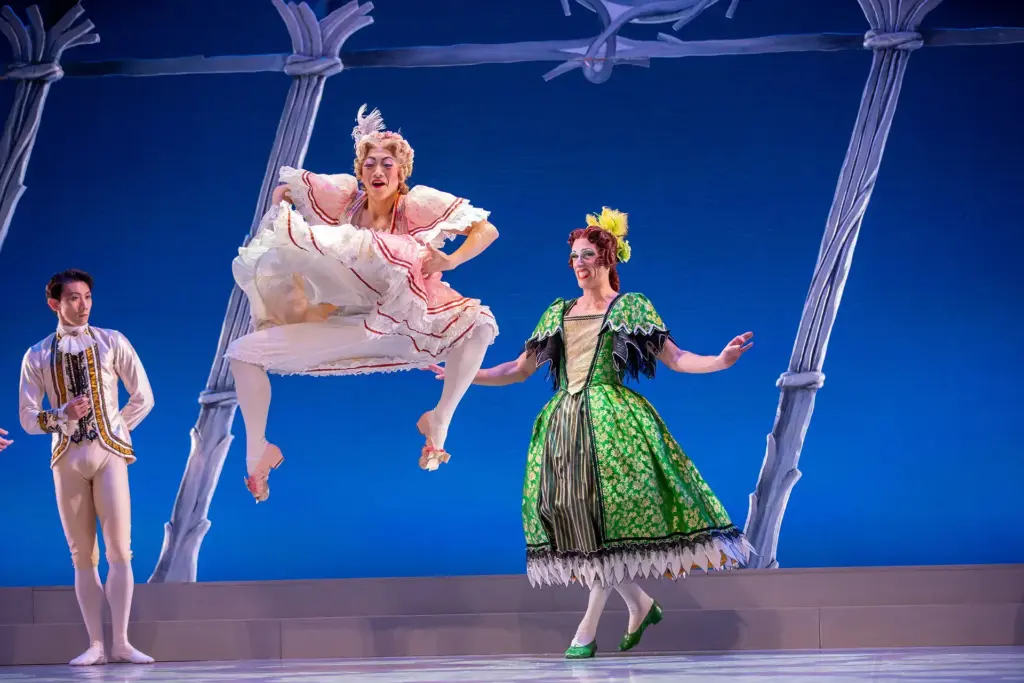
Touching on the Ugly Stepsisters, the first Cinderella ballet to use male dancers in drag instead of female dancers for these roles was also Frederick Ashton’s Cinderella. This choice makes sense when considering Ashton’s attempt to capture and accentuate the clownish nature of the characters, which has thus been adopted in many other productions to follow. It makes me wonder however, if it entirely works on this occasion. Performances by dancers Yu Wakizuka and Andrew Tomlinson as the sisters were hilarious and undoubtedly a stand-out of this production. It is a commendable effort for performers who have years of training to act as though they cannot dance the complex steps in the home and ball sequences, adding to the ludicrous nature of their characters. Whilst initially amusing, the issue I find with this approach is that their consistent presence throughout each of the three acts tends to overshadow Cinderella herself, in turn leaning closer towards pantomime territory. My main concern with this choice is the potential audience takeaway landing on how funny the Ugly Stepsisters are over a lasting memory of Cinderella’s journey to triumph over evil. Another interesting element which came as a surprise is that historically, Cinderella’s father has remained present throughout the story. It wasn’t until the 1950 Disney classic that a different approach was taken, with Cinderella’s father dying shortly after remarrying, which is utilised in many other film and theatrical adaptations to this day.
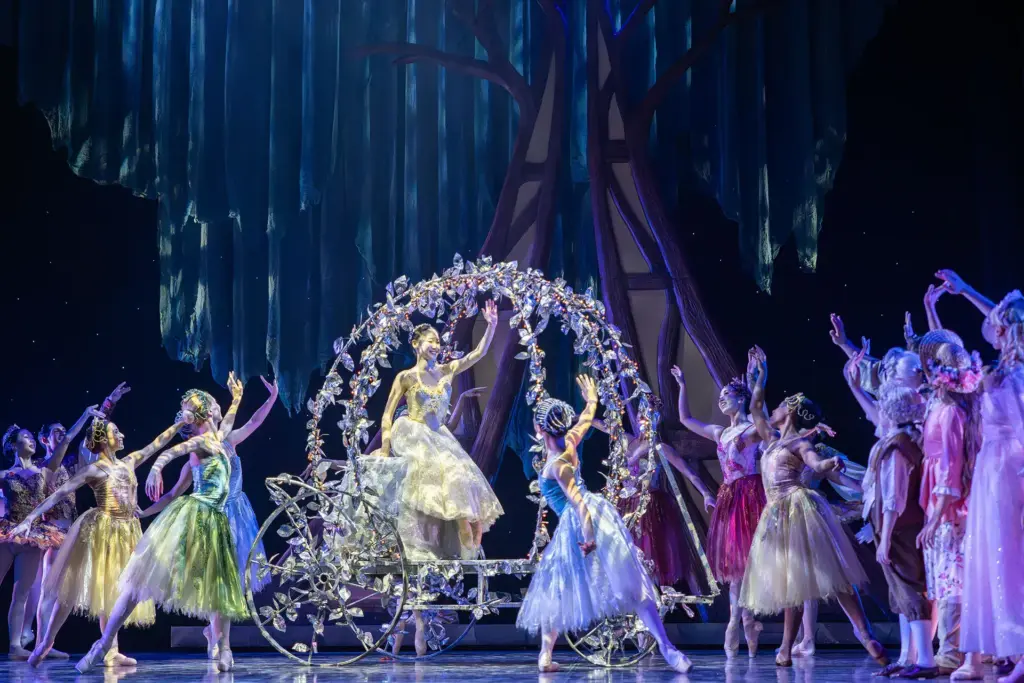
Set pieces, whilst minimal, were very pretty with a woodland nature to them, particularly Cinderella’s home. Due to the touring nature of this production, it is understandable in part that sets would be reduced with a stronger reliance on lighting and costuming. However, I do feel that the on-stage graphic projections drew focus from the dancers and action on stage. Where this did work was the act two ball scene, when the clock struck midnight and lighting became an extension of the symbolic freeze in time. Transitional dance sequences where the prince’s men were on the search for Cinderella took place in front of a stark white backdrop, which unfortunately did not serve the choreography well. The most visually striking moment is Cinderella’s entry into the sparkling (once pumpkin) carriage, ready to travel to the ball. When we think of a classic fairytale moment, this certainly sits at the top of the list and will not disappoint audiences. The rest of the company beautifully complement the lead characters through larger group dance sequences at the ball and as spirits of the garden in pas de deux’s, representing each gift to Cinderella of glass slippers, a ball gown and mice which transform into horses.
Warm and inviting with a unique twist, fairytale and ballet lovers alike will enjoy stepping into the magical world of Michael Pink’s Cinderella with Northern Ballet.
Northern Ballet is now in its final stages of touring its autumn 2026 season, with Cinderella set to visit Norwich Theatre Royal from 18 to 21 November, before heading home to Leeds Grand Theatre for a spot of Christmas magic from 15 December to 2 January.